Dr. Gymbro
←

#grip strength

4 articles
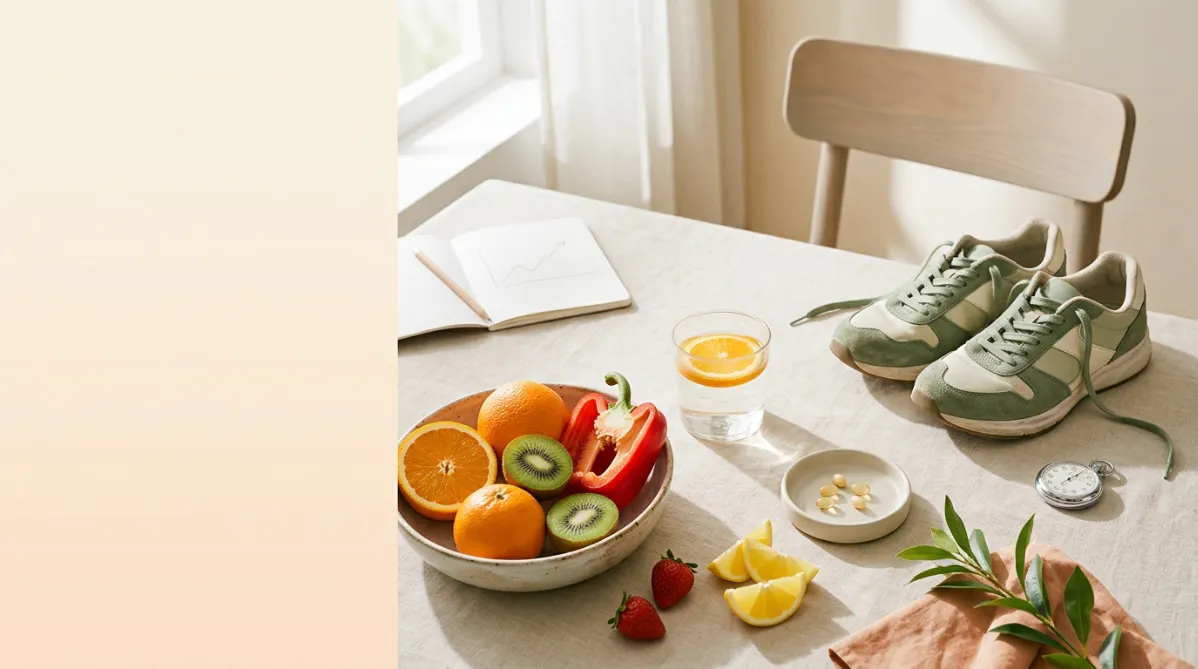
A bright, airy editorial still life photographed from slightly above on a pale oat-colored linen surface, in soft natural window light with gentle long shadows. In the foreground, a rustic ceramic bowl holds halved and whole oranges, glossy red bell pepper slices, and a few kiwi halves with emerald flesh. Beside it sit loose strawberries and a small pile of bright yellow lemon wedges. Their colors pop against the muted neutral palette. A single clear glass of water with a slice of orange rests nearby, catching the light.

On the right side of the frame, a pair of well-worn but clean walking sneakers in sage green and cream sits casually on the surface, with one lace loosely trailing. Behind them, a simple wooden chair with a light ash finish is partly visible and slightly out of focus, a quiet nod to the sit-to-stand test. A small stainless-steel stopwatch lies next to the shoes, with a subtle reflective glint.

A minimalist ceramic dish holds a few small, round, pale-yellow vitamin capsules, kept understated. A sprig of green leaves and a folded cotton napkin in soft terracotta add a warm accent. A small open notebook with a pencil rests in the upper left, its page blank except for faint, abstract pencil lines suggesting a simple rising graph, with no legible text.

The composition leaves generous negative space on the left third for title overlay, with a soft cream-to-peach gradient background. The mood is fresh, healthy, and contemplative, like a modern wellness magazine or a trendy online journal. The color palette is warm citrus orange, sunny yellow, sage green, and soft cream, with gentle terracotta accents. The depth of field is shallow, with crisp focus on the fruit and shoes and a creamy blur in the background. The overall look is clean, natural, and editorial, with fine film-like grain, true-to-life color, and a calm, optimistic tone. Landscape 16:9 framing.
nutrition

Tania witamina związana z silniejszymi nogami w miarę starzenia

BY DR. GYMBRO ·

Duże brytyjskie badanie obejmujące ponad 5 000 osób w wieku od 48 do 92 lat wykazało, że osoby z optymalnym poziomem witaminy C we krwi (≥ 50 µmol/L) chodziły szybciej i szybciej wstawały z krzesła niż osoby z niskim poziomem. Kobiety miały także silniejszy chwyt skorygowany o wzrost, podczas gdy u mężczyzn nie zaobserwowano takiego związku. Witamina C pochodząca z pożywienia wykazywała powiązania tylko u kobiet i nie tworzyła wyraźnego wzoru. Badanie jest przekrojowe, więc nie może udowodnić, że witamina C powoduje lepszą funkcję. Oto, co pokazują liczby, czego nie pokazują i dlaczego warto sprawdzić swój poziom we krwi.
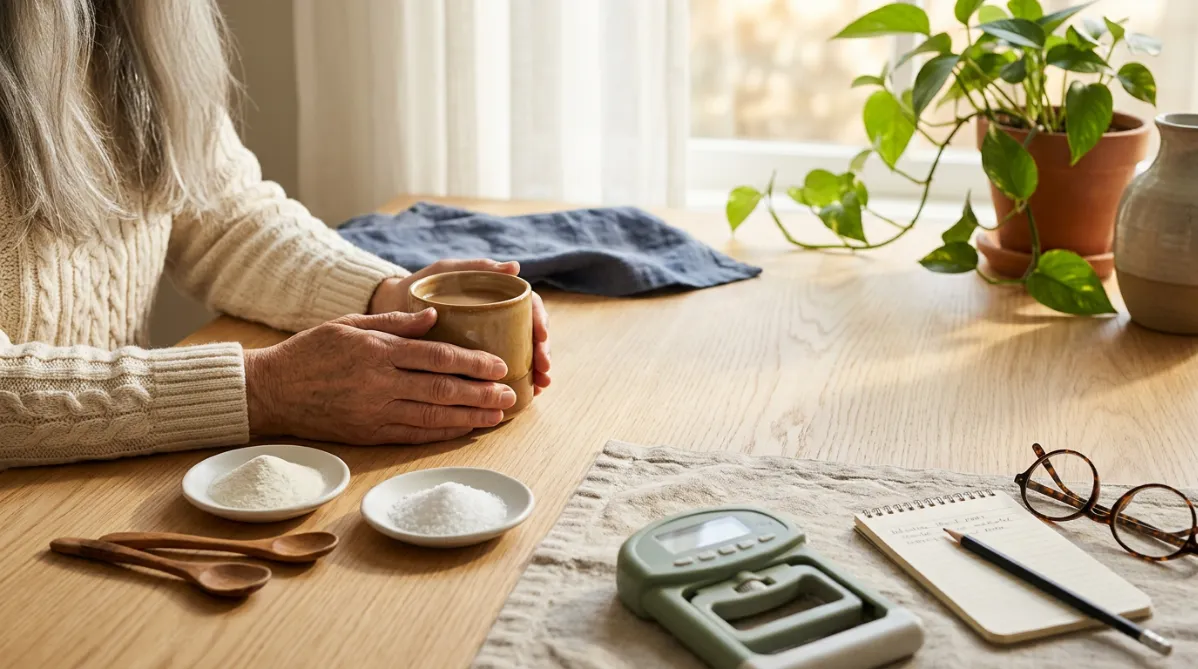
A landscape editorial photograph of a sunlit kitchen table in soft morning light. An older adult's hands, with silver hair and a cream knit sleeve just visible, rest around a ceramic mug. Beside the mug are two small matte white ceramic dishes. One holds a mound of fine white powder, and the other holds a slightly different crystalline white powder. Two wooden spoons lie next to them. A handheld hand-grip dynamometer in muted sage green sits on a linen placemat in the foreground, slightly out of focus. A small open notebook with a pencil and a pair of round tortoiseshell reading glasses sit nearby, with no legible text.

The tabletop is pale oak with a visible grain. Behind it, a window with sheer curtains lets in warm golden light, and the blurred shapes of a trailing green pothos plant and a pale terracotta vase show in the background. The color palette is warm cream, sage green, soft terracotta, and pale wood, with a touch of muted navy from a folded napkin. The mood is calm, thoughtful, and quietly scientific without any laboratory feel.

The composition follows the rule of thirds. The hands and dishes sit in the left-center, and generous negative space on the right is suitable for a title overlay. Shallow depth of field, 50mm lens look, gentle film grain, and soft shadows. Modern lifestyle-magazine and health-journal aesthetic, natural and unstaged, high-end editorial photography.
nutrition

Prekursor kreatyny przewyższa kreatynę pod względem siły chwytu u osób powyżej 65 lat

BY DR. GYMBRO ·

Małe, 8‑tygodniowe badanie przeprowadzone wśród osób starszych niż 65 lat wykazało, że kwas guanidynokarboksylowy (GAA) – bezpośredni prekursor kreatyny – zwiększył siłę chwytu bardziej niż monohydrat kreatyny. Badanie obejmowało jedynie 21 uczestników, nie zawierało programu treningowego, a 95‑procentowy przedział ufności ledwo przekraczał zero. GAA spowodowało także większy spadek miostatyny oraz wyższe wyniki w analizie impedancyjnej (BIA), co może jednak odzwierciedlać zmiany w nawodnieniu. Potencjalne ryzyko podwyższenia homocysteiny wymaga uwagi, ponieważ synteza kreatyny z GAA zużywa grupy metylowe. Poniżej znajdziesz, co badanie wykazało, czego nie może nam powiedzieć oraz dlaczego monohydrat kreatyny pozostaje sprawdzonym wyborem.
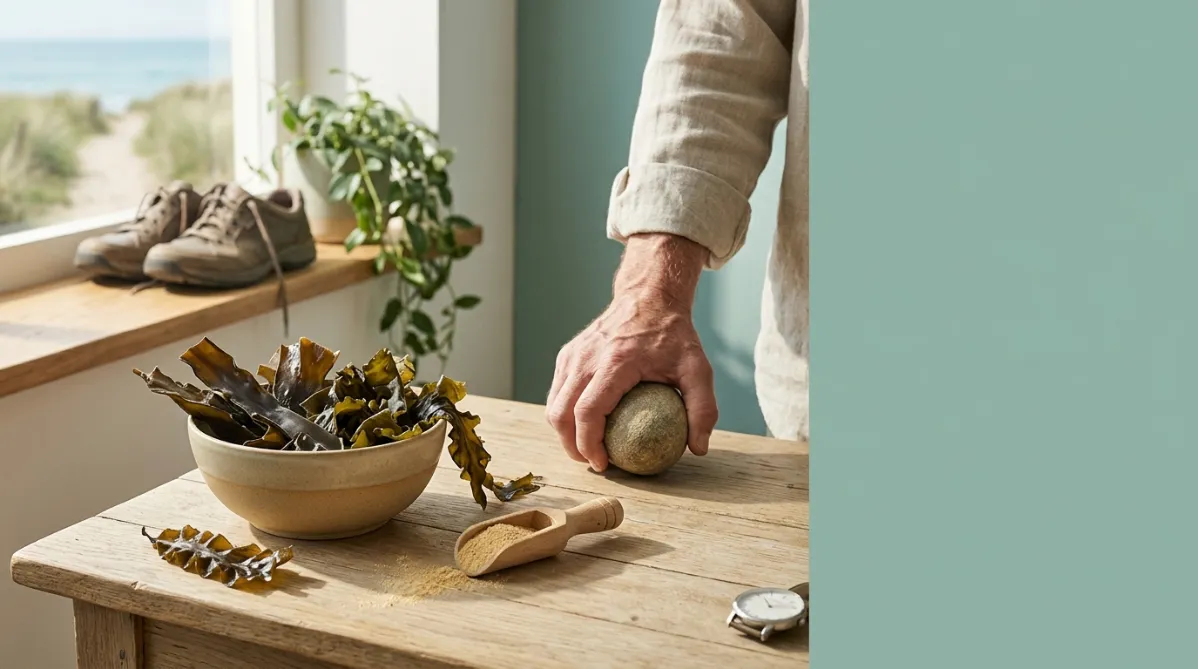
A wide, softly lit editorial photograph of a rustic light-oak table by a sunny window. On it, a handful of dried brown kelp and wakame seaweed fronds spill from a handmade matte ceramic bowl in warm sand tones, their glossy, ruffled edges catching the light. Beside the bowl sits a small wooden scoop holding fine golden-beige powder, with a little of it dusted across the table. In the middle ground, an older adult's weathered but strong hand grips a smooth, rounded river stone, with the knuckles and tendons subtly emphasized to suggest strength and vitality. Only the hand and part of a forearm in a soft oatmeal linen sleeve are visible.

In the background, slightly out of focus, a pair of worn leather walking shoes rests on a windowsill next to a trailing green plant. Beyond the window, a blurred coastal path winds through dune grass toward a pale blue sea, hinting at walking and an active daily life. A simple analog wristwatch lies on the table's edge, a quiet nod to the twelve-week timeline.

The palette is muted and natural: sage green, warm sand, soft ocean teal, and creamy off-white, with deep olive-brown accents from the seaweed. Morning light streams in from the left, casting long, gentle shadows and a faint golden glow. The depth of field is shallow, with crisp focus on the hand and seaweed and a creamy bokeh background. The composition follows the rule of thirds, with the hand and bowl on the left and generous negative space on the right for headline text. The mood is calm and hopeful, with a clean, contemporary wellness-magazine feel. The image is shot as if on a 50mm lens with subtle film grain and a natural, uncluttered, tactile look.
science research

Fucoidan z alg morskich zwiększył siłę chwytu u osób powyżej 60 lat w ciągu 12 tygodni

BY DR. GYMBRO ·

Utrata siły wraz z wiekiem jest jednym z najczęstszych, a jednocześnie najrzadziej omawianych, aspektów starzenia, a trening siłowy nie jest dostępny dla każdego. Nowe, 12‑tygodniowe, randomizowane badanie wykazało, że niskocząsteczkowy fucoidan z alg morskich przyjmowany w dawce 1650 mg dziennie znacząco poprawił siłę chwytu i wynik w teście 6‑minutowego marszu u osób powyżej 60 lat. Ku zaskoczeniu, masa mięśniowa nie uległa zmianie, a dodatki w postaci BCAA i witaminy D nie przyniosły dodatkowych korzyści. Badanie było małe i dotyczyło jednego, konkretnego produktu, więc jest obiecującym tropem, a nie ostatecznym wnioskiem. Oto, co pokazują wyniki i co oznaczają w praktyce.
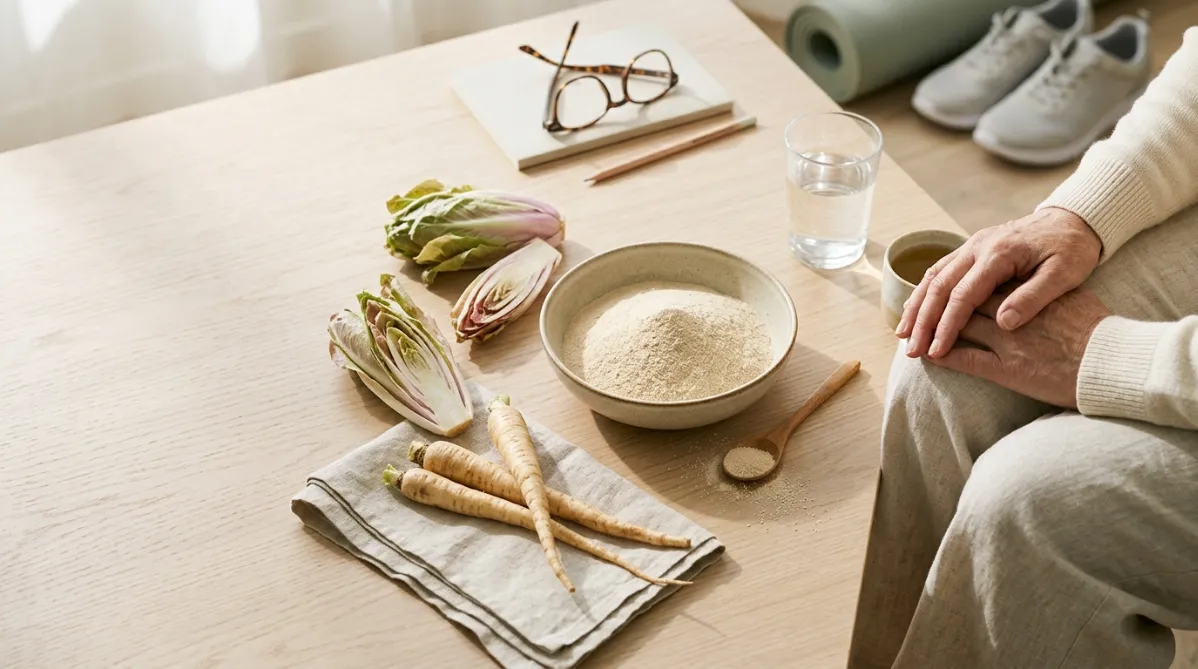
A bright, airy editorial still life photographed from slightly above on a pale oak table in soft morning window light. At the center sits a shallow ceramic bowl in matte oatmeal glaze filled with fine, creamy-beige inulin powder. A wooden spoon rests beside it, with a few fine grains scattered across the wood. Around the bowl, several fresh chicory roots with pale tan skin and delicate taper lie on a folded linen napkin. Next to them are a few crisp, leafy chicory heads in muted green and soft magenta tones, and a halved root that shows its pale, fibrous interior.

On the right side of the frame, a pair of older adult hands in a soft cream knit sleeve rest gently on a knee covered by relaxed linen trousers. A glass of water stands nearby, along with a small ceramic cup of herbal tea. A folded pair of simple tortoiseshell reading glasses and a minimalist notebook with a thin pencil sit in the background, hinting at a considered, research-minded atmosphere. A slim yoga mat edge and a pair of light-gray walking shoes appear softly out of focus in the far corner, suggesting gentle exercise and mobility without overwhelming the scene.

The color palette is calm and modern: warm creams, sage green, soft terracotta, and touches of dusty rose from the chicory leaves. Shadows are gentle and long, with natural light raking across the table and highlighting the textures of powder, linen, wood, and root. The depth of field is shallow, with the bowl and roots in crisp focus and the background melting into a creamy blur. The composition leaves generous negative space on the left third of the frame, suitable for headline overlay, and the overall feel is clean, wholesome, and contemporary, like a lifestyle-meets-science feature in a trendy online health journal. Fine film-like grain, true-to-life color, and a quiet, optimistic mood.
recovery

Tani błonnik z korzenia cykorii przewyższa placebo przy bólu kolana: spadek o 1,11 punktu

BY DR. GYMBRO ·

Tani błonnik z korzenia cykorii nieco przewyższył placebo w randomizowanym badaniu przy bólu kolana. 20 g dziennie inuliny zmniejszyło ból o 1,11 punktu, przekraczając próg klinicznie istotnej zmiany, oraz zwiększyło siłę chwytu. Jedynie grupy przyjmujące inulinę odnotowały wzrost poziomu maślanu i GLP‑1, co sugeruje związek jelito‑mięsień. Badanie dotyczyło starszych dorosłych z chorobą zwyrodnieniową stawów kolanowych (średnia wieku 67,5 lat), a ćwiczenia wspierane fizjoterapią przyniosły jeszcze większą redukcję bólu (1,55 punktu). Oto co badanie wykazało, czego nie może nam powiedzieć i jak rozważnie wykorzystać te wyniki.

This page is available in